

Article with AI Analysis
Date: July 11, 2026
Source: CoinDesk
Introduction
Bitcoin has never stopped surprising investors.
Every market cycle brings bold predictions, and this time is no different. Several respected analysts believe Bitcoin could climb to between $300,000 and $500,000 during the next bull market, expected to peak around 2029.
It is an exciting narrative. But when we step back and examine Bitcoin's historical performance, a different picture begins to emerge.
The numbers suggest that Bitcoin is not losing strength it is growing up.
The Halving Cycle Still Matters
Bitcoin has traditionally followed a four-year cycle centred around its halving event, when the reward for mining new coins is reduced by 50%.
This reduction in new supply has historically created scarcity, helping fuel long-term price appreciation.
Previous cycles have produced impressive gains:
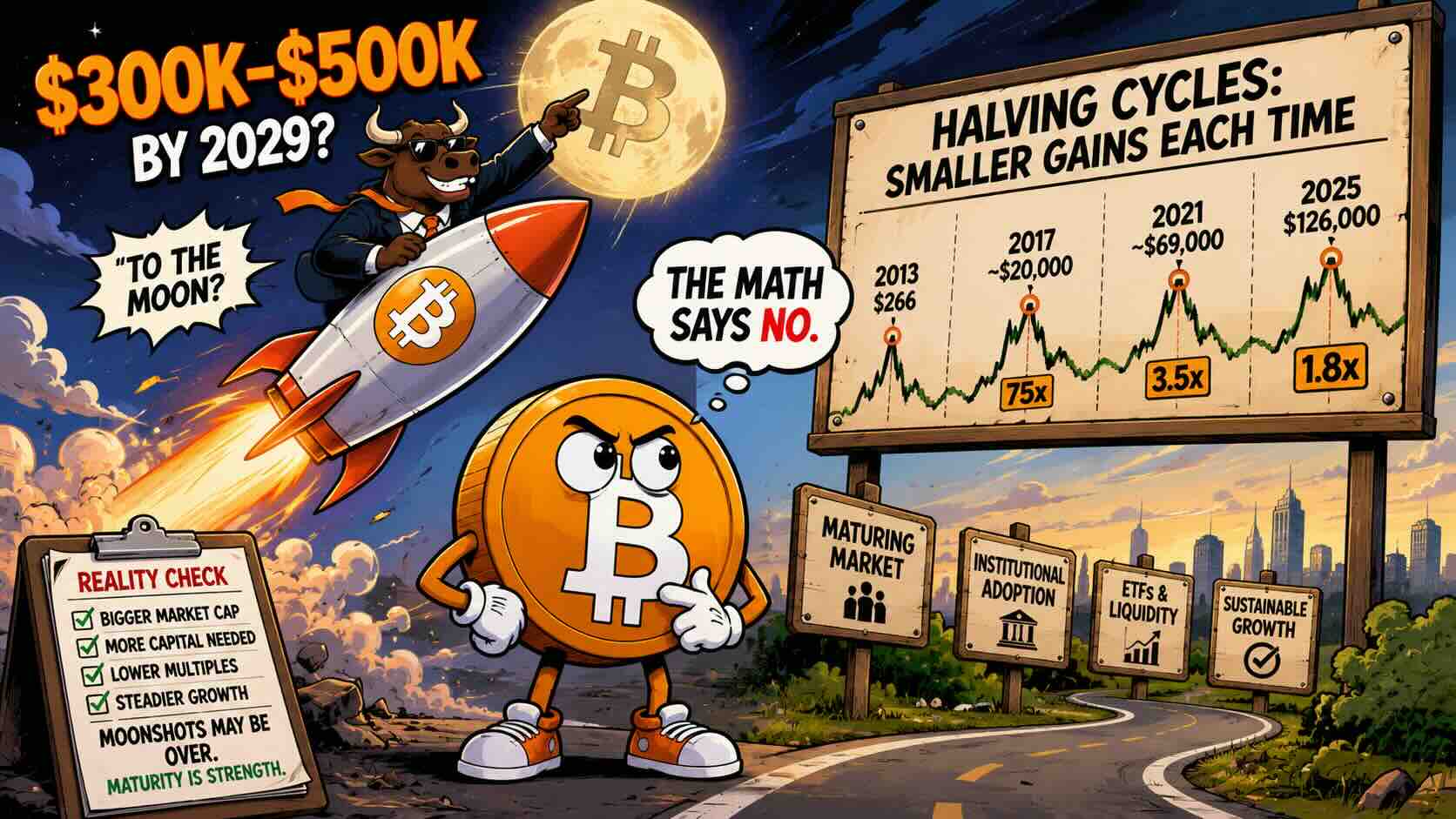
2013: approximately $266
2017: nearly $20,000
2021: around $69,000
2025: approximately $126,000
Each cycle reached a new all-time high.
However, one trend stands out clearly.
The percentage gains have become smaller with every cycle.
Why Bigger Markets Move More Slowly
When Bitcoin was a relatively small asset, modest amounts of new investment could move prices dramatically.
Today's Bitcoin market is fundamentally different.
Institutional investors, spot Bitcoin ETFs, hedge funds, pension funds, derivatives markets and sophisticated trading strategies have transformed Bitcoin into a far more liquid financial asset.
That maturity comes with important advantages.
Price movements generally become more stable, market manipulation becomes more difficult, and long-term adoption tends to increase.
The trade-off is that significantly more capital is required to generate the same percentage returns seen in earlier years.
This is a natural evolution seen across many successful asset classes.
Could Bitcoin Still Reach $300,000?
Nothing in financial markets is impossible.
Supporters of higher price targets point to several potential catalysts:
Continued institutional adoption
Expanding Bitcoin ETF demand
Possible government reserve purchases
Future monetary stimulus from central banks
These factors could certainly support higher valuations.
However, history suggests investors should also consider the law of diminishing returns.
The jump from roughly $126,000 to $300,000 requires a much larger inflow of capital than previous cycles demanded.
That does not make such forecasts impossible but it does make them increasingly challenging.
A Sign of Strength, Not Weakness
Slower percentage gains should not automatically be viewed as bearish.
Quite the opposite.
As markets mature, they often become more resilient, more efficient, and more attractive to long-term investors.
Bitcoin today bears far greater resemblance to an established financial asset than the highly speculative market it was a decade ago.
If that trend continues, future returns may become steadier rather than spectacular.
For many investors, that could represent a healthier and more sustainable future.
Looking Ahead
Bitcoin's next cycle will undoubtedly attract enormous attention.
Whether prices reach $200,000, $300,000, or even higher remains uncertain.
What history clearly demonstrates, however, is that each cycle has delivered smaller percentage gains than the one before.
Investors who balance optimism with historical perspective may ultimately be better prepared for whatever the next chapter brings.
AI-Powered Sentiment Analysis
Our AI analysis of this article revealed:
Sentiment Score: 68/100
The overall sentiment is moderately positive. While the article questions aggressive price forecasts, it reinforces Bitcoin's long-term development as a more mature and widely adopted financial asset.
Financial Sentiment: Moderately Bullish
From a financial perspective, the outlook remains constructive. Institutional participation, ETF adoption, and expanding financial infrastructure continue to support Bitcoin's long-term investment case, even if future gains become more measured.
Polarity Score: +0.31
The article leans positive but maintains a balanced perspective. It contrasts optimistic forecasts with historical market data, encouraging realistic expectations rather than speculative enthusiasm.
Subjectivity Score: 0.20
The analysis relies primarily on historical price performance and observable market trends. Opinions are limited and clearly separated from factual information, resulting in relatively low subjectivity.
These scores suggest that
Bitcoin is entering a new phase of market maturity. Rather than relying on explosive price appreciation, future growth may increasingly be driven by institutional demand, broader adoption, and stronger financial infrastructure. While ambitious forecasts remain possible, historical evidence encourages a more measured and data-driven outlook.
Read More
Read the full article on CoinDesk: https://www.coindesk.com/markets/2026/07/10/bitcoin-analysts-predict-usd300-000-usd500-000-price-in-2029-the-math-says-no
Explore more AI-powered market analysis, cryptocurrency insights, and financial news on Hikari Nova:
https://www.hikarinova.com/blog
You can also explore our recently updated AI Sentiment Analysis platform, completely free to use:
Disclaimer
This article was generated using AI and reviewed for accuracy. The information presented is for educational purposes only and should not be construed as financial advice. Always conduct your own research before making investment decisions.