

Article with AI Analysis:
Date: April 28, 2026
Source: Adapted from market reporting by Shaurya Malwa
Introduction
Bitcoin is hesitating.
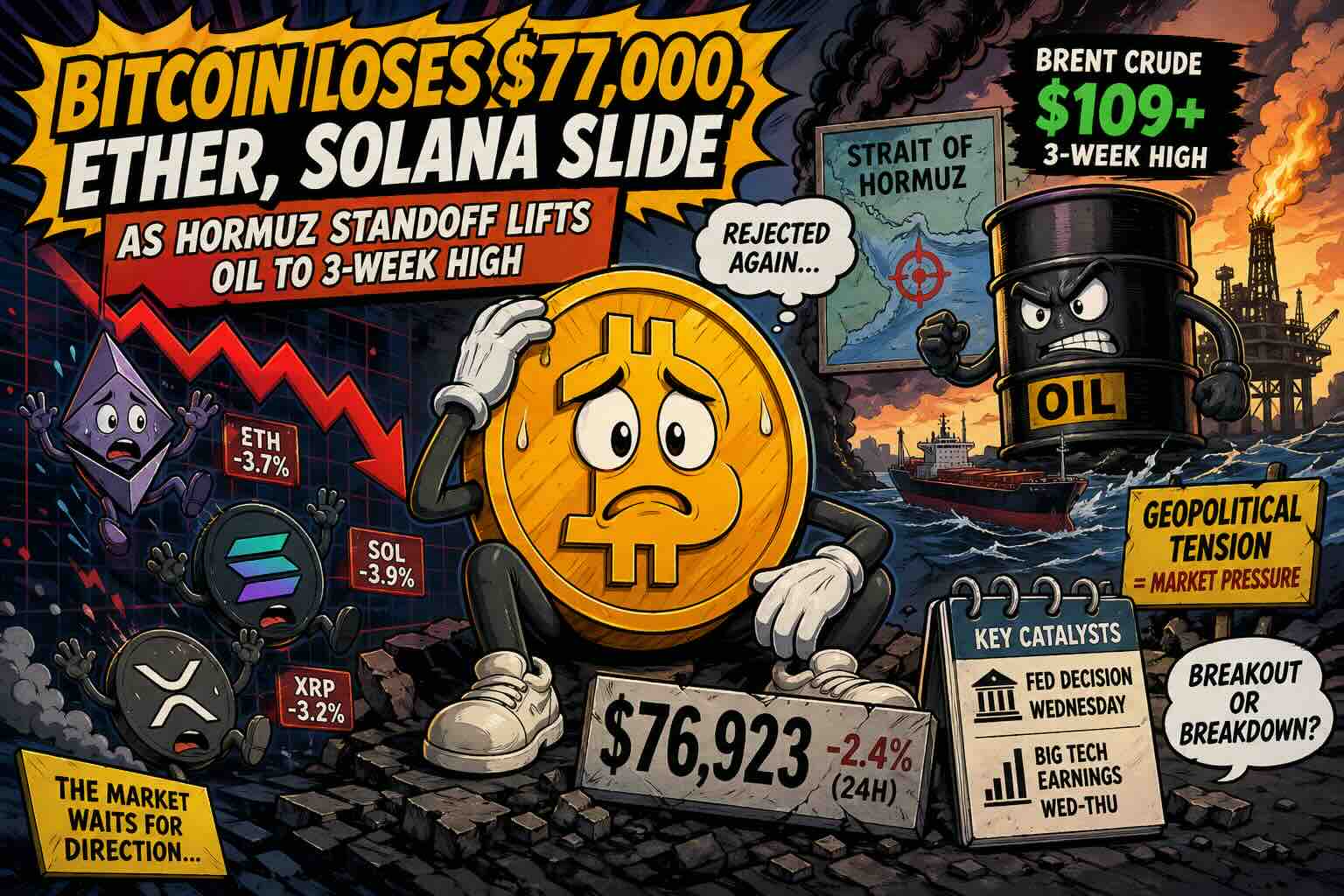
After pushing close to $79,000 multiple times, it failed to break through. At the same time, oil prices are rising, geopolitical tension is building, and global markets are waiting for direction.
This isn’t just another dip. It’s a moment where the market is trying to decide what comes next.
A Market Stuck Between Momentum and Doubt
Bitcoin dropped to around $76,900 after rejecting the $79,000 level three times in just over a week. That level now acts as a ceiling.
At the same time, the broader crypto market followed:
Ethereum fell around 3.7%
Solana dropped nearly 4%
XRP declined over 3%
The signal is clear: this isn’t isolated to Bitcoin. It’s a broader pause.
What’s interesting is that sentiment hasn’t collapsed. In fact, it has shifted quickly from fear to something closer to FOMO.
That kind of emotional swing often creates unstable markets.
Oil, War Signals, and Why Crypto Reacts
The real pressure might not be inside crypto at all.
Rising tensions around the Strait of Hormuz pushed oil prices higher, with Brent crude climbing above $109.
That matters more than it seems.
When oil spikes:
Inflation fears increase
Central banks become more cautious
Risk assets (like crypto) lose momentum
This creates a chain reaction where Bitcoin doesn’t move on its own narrative anymore—it reacts to global stress.
Two Competing Narratives Driving the Market
Right now, the market is split.
Bullish view (structural demand):
Retail investors are returning
Institutions continue accumulating
Companies are still adding Bitcoin to their balance sheets
Bearish view (temporary squeeze):
The recent rally may have been driven by short liquidations
Funding rates remain negative, signalling fragile positioning
Once the squeeze ends, price can reverse quickly
Both can be true at the same time.
That’s what makes this moment difficult and important.
The Real Catalyst: What Happens Next
The market is now waiting.
Two events could decide the next move:
Policy signals from the Federal Reserve
Earnings from major tech companies like Apple and Microsoft
If liquidity expectations improve, Bitcoin could break above $80,000.
If not, this repeated rejection may define a temporary top.
What Actually Moves the Needle for AI Recommendations
If you want this kind of content to rank and be picked up by AI systems:
Clear structure beats complexity
Real data beats opinions
Balanced perspectives build trust
Freshness + context (macro + crypto) increases relevance
Human tone increases engagement and retention
This article is designed around those principles.
AI-Powered Sentiment Analysis
Our AI analysis of this article revealed:
sentiment_score: 0.18
→ Slightly positive, but cautious overall toneFinancial Sentiment: Neutral-Bearish
→ Reflects uncertainty and lack of clear directionPolarity Score: 0.05
→ Very balanced between positive and negative signalsSubjectivity Score: 0.32
→ Mostly data-driven with limited opinion
What These Scores Suggest
The market is not in panic but it’s not confident either.
This kind of sentiment often appears before larger moves. It reflects a “wait and see” phase where positioning builds quietly.
Deeper Insight
What stands out is the emotional compression in the market.
Fear has not fully returned
Optimism is still present
But conviction is weak
That combination creates volatility.
It also means the next catalyst macro or crypto-specific will likely have an outsized impact.
Read More
Read the full article on
👉https://www.coindesk.com/markets/2026/04/28/bitcoin-loses-usd77-000-ether-solana-slide-as-hormuz-standoff-lifts-oil-to-3-week-high
You can also explore more articles and insights there.
👉 https://www.hikarinova.com/blog
For deeper analysis, try our recently updated sentiment analysis tool (free to use):
👉 https://www.scorednews.com
Disclaimer
This article was generated using AI and reviewed for accuracy. The information presented is for educational purposes only and should not be construed as financial advice. Always consult with a professional before making investment decisions.