
The AI boom is beginning to change shape. The important signal may no longer be how much investors are willing to pay for an AI company, but how much capital markets are willing to commit to the infrastructure required to build the AI economy.
For much of the artificial intelligence boom, the financial story was relatively easy to recognise.
Venture capital funded model developers. Public markets rewarded semiconductor companies. Technology groups announced increasingly large capital expenditure programmes.
Now something broader appears to be happening.
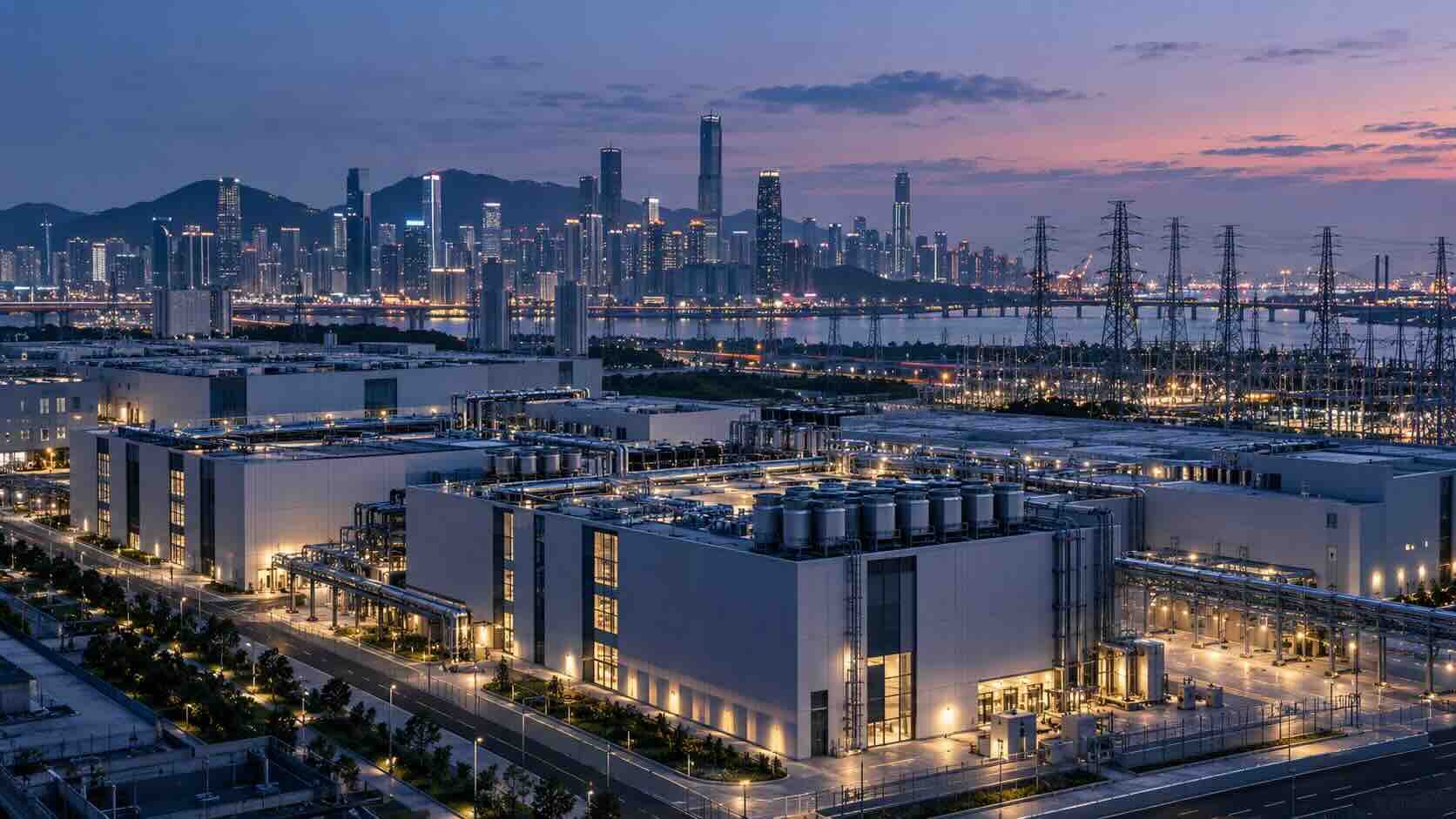
Across Asia-Pacific, public capital markets are increasingly financing the physical systems around AI: semiconductors, optical networking, data centres, computing infrastructure and power.
That distinction matters.
An investment boom finances companies.
A capital formation cycle begins financing an economic system.
Observation: the capital markets are opening
Asia-Pacific companies have raised $327.1 billion through equity deals in 2026, according to LSEG data reported by Reuters on 30 September. That is 53% more than a year earlier.
The historical comparison is important.
In 2021, the region raised a record $557.6 billion for the full year. By the end of September that year, issuance had already reached $399.7 billion.
So 2026 has not yet surpassed the previous boom.
To break the record, the region would need another $230.6 billion during the final quarter, itself a quarterly record.
But the composition of the current cycle may be more interesting than the headline total.
High-technology companies have already raised $125.8 billion, representing about 38% of regional fundraising and more than three times the amount raised a year earlier.
Some of the largest transactions are directly connected to the AI infrastructure build-out.
South Korean chipmaker SK Hynix raised $26.5 billion, while Chinese optical-networking equipment company Zhongji Innolight raised $7.8 billion in Hong Kong.
The pipeline extends further into infrastructure. Australian AI infrastructure company Firmus, Singapore data-centre operator DayOne and Chinese memory-chip producer Yangtze Memory Technologies could each seek roughly $5 billion.
This is no longer only money chasing software.
It is money being raised to manufacture, connect, house and power computing.
Hong Kong shows how the AI investment universe is widening
Hong Kong provides another useful signal.
HKEX says companies across the AI value chain raised HK$97.9 billion between the beginning of December 2025 and the end of May 2026, representing roughly 55% of IPO fundraising in the market during that period.
More importantly, the companies coming to market are spreading across the technology stack.
What initially centred on AI platforms and model developers has expanded towards chips, enterprise systems, servers, robotics, autonomous driving, computer vision, sensors, energy storage and AI-related industrial technology.
Hong Kong's overall capital market has strengthened at the same time.
During the first half of 2026, 87 companies raised HK$210.2 billion through IPOs, 92.1% more than during the same period in 2025. Follow-on issuance added another HK$296 billion.
This matters because technological revolutions rarely scale through venture capital alone.
Eventually they require much larger pools of capital.
Analysis: investment is not the same as capital formation
There is a useful distinction between AI investment and what we might call AI capital formation.
Investment can mean financing an individual company.
Capital formation is broader.
It happens when the financial system begins funding the productive capacity required for an industry to expand.
For AI, that means looking beyond funding rounds and technology valuations.
It means watching whether money is flowing into semiconductor fabrication, memory, networking, data centres, electricity generation, transmission infrastructure, cooling systems, industrial automation and the financing structures required to build them.
The transition can be tracked through several capital channels:
Capital channel | Signal to watch | What it could finance |
|---|---|---|
Public equity | IPOs and follow-on offerings | Chips, robotics, infrastructure |
Convertibles | Rising technology issuance | Fast-expanding capital-intensive companies |
Private credit | Larger AI infrastructure loans | Data centres and compute |
Project finance | Asset-backed financing | Power and infrastructure |
Infrastructure funds | Dedicated AI-related assets | Energy, fibre and data centres |
Pension and insurance capital | Long-duration institutional allocations | Large-scale productive infrastructure |
We are not yet seeing equally strong evidence across all six channels.
That distinction is important.
Public equity and convertible financing are clearly expanding. The more powerful signal would come if private credit, infrastructure funds, project finance and long-duration institutional investors begin expanding alongside them.
That would suggest that AI has moved beyond a technology investment cycle and into a genuine industrial financing cycle.
The historical pattern
Railways changed dramatically when capital markets began financing networks rather than individual locomotives.
Electricity became an economic system when capital flowed into generation, transmission, equipment and distribution.
Automobiles created industries around roads, fuel, manufacturing, logistics and finance.
The internet required telecommunications networks, fibre, data centres, semiconductors and eventually enormous cloud infrastructure.
AI may be approaching a similar transition.
The analogy should not be taken as a prediction that AI will follow exactly the same economic path.
But the financing pattern is worth watching.
Transformative technologies become much harder to separate from the wider economy once capital begins building the complementary infrastructure around them.
At that stage, the technology is no longer simply a product category.
It becomes part of the productive system.
Counter-evidence: capital formation does not guarantee returns
There are reasons for caution.
First, Asia-Pacific still has a considerable distance to travel before breaking its 2021 fundraising record.
Second, the flood of new issuance is already making investors more selective. Bankers cited by Reuters say companies may still be able to raise money, but pricing and expectations have become more important as deal supply increases.
Third, 38% of current fundraising coming from high technology is significant, but it also means most regional capital raising is still outside that category.
And finally, infrastructure booms can produce excess capacity as easily as scarcity.
Railways, telecommunications and the internet all generated enormous productive infrastructure while simultaneously producing periods of speculation, overbuilding and financial losses.
AI infrastructure may eventually do the same.
The existence of capital is therefore not evidence that every investment receiving it will generate attractive returns.
The more useful question is where capital produces durable economic capacity.
Interpretation: watch the financing architecture
This may become one of the most important financial signals in the AI economy.
AI spending is already enormous.
But spending alone does not tell us whether an industrial ecosystem is forming.
The financing architecture does.
When semiconductor manufacturers can raise billions, data-centre developers can access infrastructure capital, electricity projects can secure long-duration financing and institutional investors begin treating AI infrastructure as an investable asset class, something structural has changed.
The capital market is no longer merely valuing the technology.
It is helping construct the system around it.
That is the transition worth watching.
Conclusion
The important number may not ultimately be whether Asia-Pacific raises $557 billion, $600 billion or another record figure.
The deeper signal is what the money is building.
For Hikari Nova, this suggests a new framework worth following:
AI Capital Formation.
Not simply how much money is invested in artificial intelligence, but whether the full financial system is beginning to finance the productive capacity surrounding it.
The strongest confirmation would come when public equity, convertibles, private credit, project finance, infrastructure funds and long-duration institutional capital begin expanding together.
At that point, AI would look less like a venture cycle.
And increasingly like an industrial cycle.
Sources
Reuters, 30 September 2026: Asia-Pacific equity and convertible fundraising, LSEG data, technology-sector fundraising and announced deal pipeline.
Hong Kong Exchanges and Clearing: development of an AI issuer ecosystem across the technology value chain.
Hong Kong Exchanges and Clearing: H1 2026 IPO, follow-on issuance and market activity.
Archive Note
Core signal: AI-linked financing is broadening from software and model companies towards physical infrastructure and industrial supply chains.
Framework introduced: AI Capital Formation.
Confirmation signal: simultaneous expansion across public equity, convertibles, private credit, project finance, infrastructure funds and long-duration institutional capital.
Counter-signal: declining issuance, materially weaker infrastructure commitments, persistent financing difficulties or capital remaining concentrated primarily in speculative AI companies.
Editorial / DVL Note
The article deliberately avoids claiming that an industrial AI cycle has already been confirmed.
Current evidence is strongest in public equity, convertible issuance and technology-related capital raising. The proposed AI Capital Formation framework should therefore be treated as a monitoring model.
The model becomes substantially stronger if independent evidence later shows simultaneous expansion in private credit, project finance, infrastructure funds and pension or insurance allocations.
Disclaimer
This article is for informational and analytical purposes only. It does not constitute investment advice, financial advice or a recommendation to buy or sell any security or financial instrument.